

CLIMATE AND HEALTHE BULLETIN FOR JULY 2026

Summary:
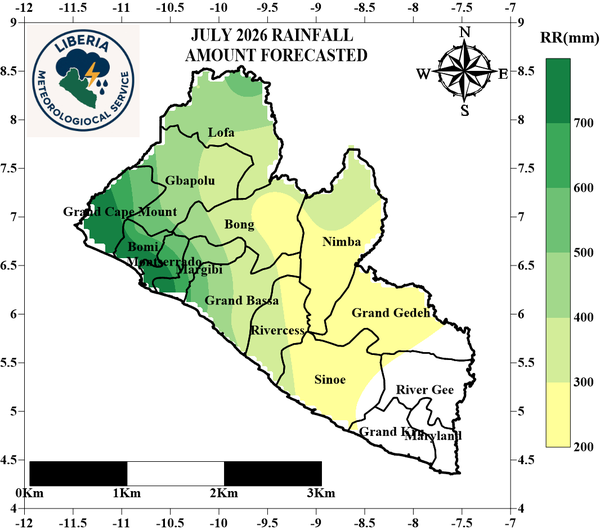
In July 2026, cumulative rainfall is expected to increase across Liberia, with total monthly rainfall ranging from 118.3 mm to 1,045.1 mm. The southwestern and northwestern regions are forecasted to receive the highest rainfall totals, with Grand Cape Mount, Bomi, Montserrado, and Margibi Counties expected to experience the highest amounts of rainfall during the month. Nevertheless, Maryland, Grand Kru, River Gee, and the eastern parts of Grand Gedeh County are expected to record the lowest rainfall totals during the same period.
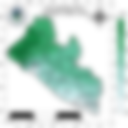
Summary:
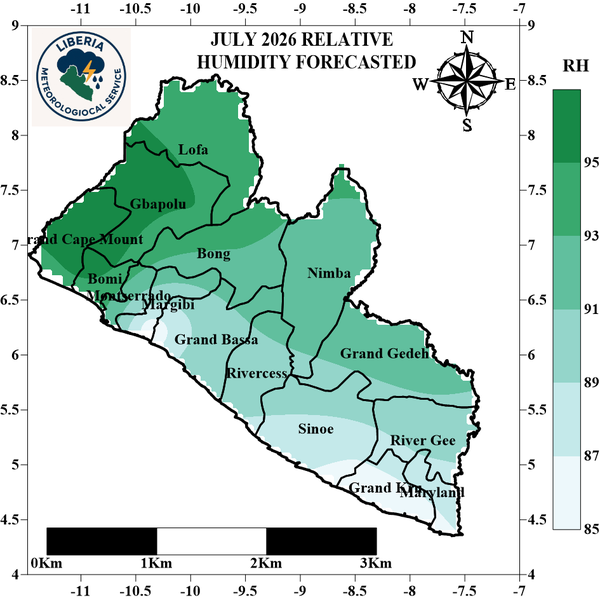
In July 2026, high average relative humidity is expected to increase across the country with Grand Cape Mount, Gbapolu and Bomi counties expected to experience high relative humidity. Sinoe, Grand Kru, Maryland and parts of Margibi and Grand Bassa counties are predicted low relative humidity during this period. However, Nevertheless the other parts of the county is expected to experience moderate relative humidity during the same period. Average relative humidity during the month is forecasted to range between 85.3% and 96.3%
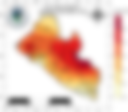
Summary:
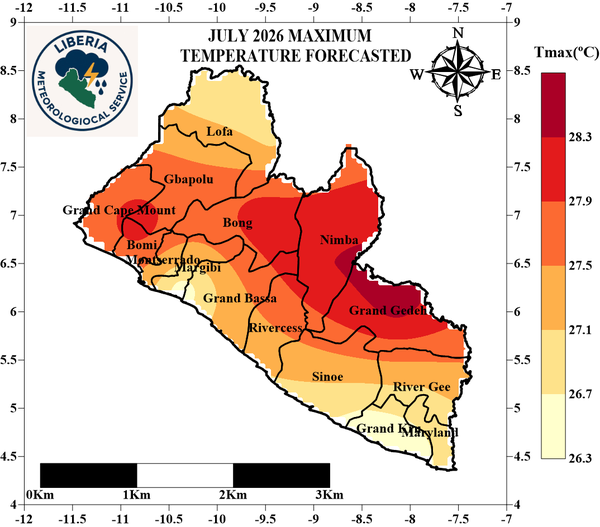
Maximum temperature in July 2026 is anticipated to range between 26.3°C to 28.5°C across the Country. Grand Gedeh, Nimba, east of Bong, lower Gbarpolu, northwest of Bomi and east of Grand Cape Mount counties are anticipated to experience high maximum temperature. Margibi, Grand Bassa, Sinoe, Grand Kru counties are anticipated to experience low maximum temperature (figure 3). However, moderate maximum temperature is expected in the other parts of the country.

Summary:
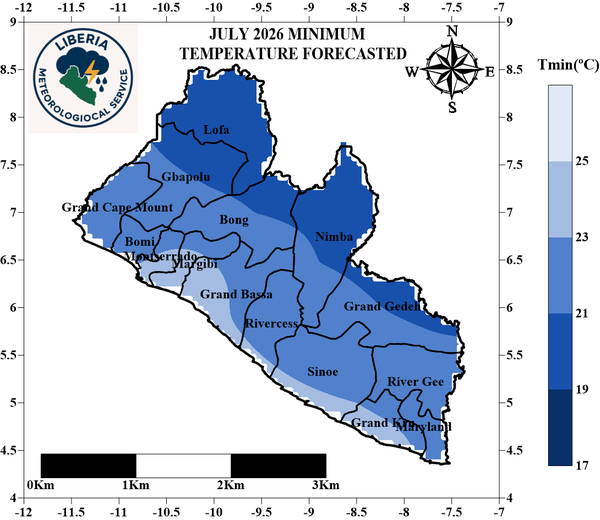
Minimum temperature across the country in July 2026 is anticipated to range between 21.0°C and 25.0°C. The highest minimum temperature is anticipated to occur along the coastal region including counties such as Maryland, Grand Kru, Sinoe, Rivercess, Grand Bassa, Margibi and Montserrado while the lowest minimum temperature is expected in Lofa and parts of Nimba, Bong, Gbapolu and Grand Gedeh counties.

Summary:
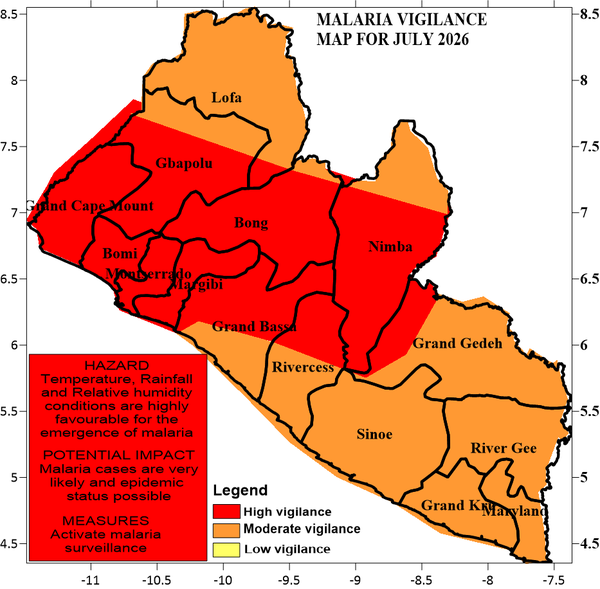
The anticipated climatic conditions during July 2026, characterized by increased rainfall, high relative humidity, and favorable temperatures, are expected to create conducive environments for mosquito breeding and survival. Consequently, there is a moderate and high likelihood of increased malaria transmission across the country during the month.
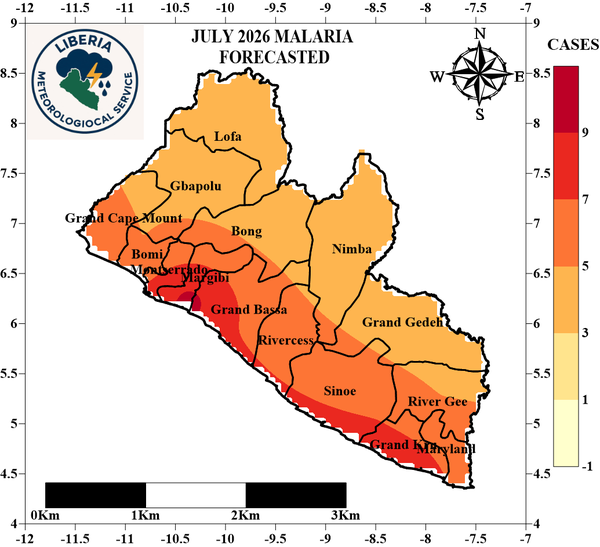
Malaria vigilance is expected to be high in the southwest and central region while the other parts of the Country is expected to experience moderate impact. Health authorities, communities, and households are encouraged to strengthen preventive and control measures, including the proper use of insecticide-treated mosquito nets, environmental sanitation, and the timely diagnosis and treatment of suspected malaria cases.
Continuous monitoring of weather and environmental conditions, coupled with enhanced public health awareness campaigns, will be essential in reducing the potential impacts of malaria during this period.
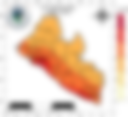
Summary:
The predicted malaria case for various locations across the country for the month of July 2026 is between 3.8 to 9.8% cases per one hundred persons. The highest malaria cases are expected in parts of Margibi, Grand Bassa, Sinoe and Grand Kru counties. The other parts of the Country are expected to experience moderate increase in malaria cases during the month under review.

Highlights of the climate and health Bulletin for JULY 2026
Rainfall: In July 2026, cumulative rainfall is expected to increase across Liberia, with total monthly rainfall ranging from 118.3 mm to 1,045.1 mm. The southwestern and northwestern regions are forecasted to receive the highest rainfall totals, with Grand Cape Mount, Bomi, Montserrado, and Margibi Counties expected to experience the highest amounts of rainfall during the month. Nevertheless, Maryland, Grand Kru, River Gee, and the eastern parts of Grand Gedeh County are expected to record the lowest rainfall totals during the same period.
Relative Humidity: In July 2026, high average relative humidity is expected to increase across the country with Grand Cape Mount, Gbapolu and Bomi counties expected to experience high relative humidity. Sinoe, Grand Kru, Maryland and parts of Margibi and Grand Bassa counties are predicted low relative humidity during this period. However, Nevertheless the other parts of the county is expected to experience moderate relative humidity during the same period. Average relative humidity during the month is forecasted to range between 85.3% and 96.3%
Temperature: Maximum temperature: Maximum temperature in July 2026 is anticipated to range between 26.3°C and 28.5°C across the Country. Grand Gedeh, Nimba, east of Bong, lower Gbapolu, northwest of Bomi and east of Grand Cape Mount counties are anticipated to experience high maximum temperature. Margibi, Grand Bassa, Sinoe, Grand Kru counties are anticipated to experience low maximum temperature (figure 3). However, moderate maximum temperature is expected in the other parts of the country.
Minimum temperature: Minimum temperature across the country in July 2026 is anticipated to range between 21.0°C and 25.0°C. The highest minimum temperature is anticipated to occur along the coastal region including counties such as Maryland, Grand Kru, Sinoe, Rivercess, Grand Bassa, Margibi and Montserrado while the lowest minimum temperature is expected in Lofa and parts of Nimba, Bong, Gbapolu and Grand Gedeh counties.
Mean temperature: Expected between 23.6°C and 25.7°C, with relatively lower averages in Lofa County and parts of Gbapolu and Nimba counties while the coastal counties are expected to experience the highest.
Malaria Cases: The predicted malaria case for various locations across the country for the month of July 2026 is between 3.8 to 9.8% cases per one hundred persons. The highest malaria cases are expected in parts of Margibi, Grand Bassa, Sinoe and Grand Kru counties. The other parts of the Country are expected to experience moderate increase in malaria cases during the month under review.
Malaria Vigilance: The anticipated climatic conditions during July 2026, characterized by increased rainfall, high relative humidity, and favorable temperatures, are expected to create conducive environments for mosquito breeding and survival.
Medication Instability Vigilance: The forecasted temperature and relative humidity conditions for July 2026 may affect the stability, efficacy, and shelf life of certain drugs and medical supplies across Liberia.
Medical advisory for JULY 2026
Based on the forecasted climatic conditions for July 2026, which favor increased mosquito breeding and the spread of vector-borne diseases, medical personnel, individuals, and stakeholders in the health sector are advised to take the following precautionary measures.
Carry malaria medication when traveling to high-risk areas, particularly regions prone to increased rainfall and standing water. Adhere to prescribed malaria prophylaxis (preventive medication), especially for vulnerable groups and individuals residing in or visiting high-risk zones.
Seek prompt medical attention at recognized health facilities when symptoms of malaria such as fever, chills, headache, or body weakness are observed.
Store all medications properly in a safe, cool, and dry place to prevent spoilage, contamination, or loss of effectiveness.
Promote the use of insecticide-treated mosquito nets (ITNs), especially during nighttime, to reduce exposure to mosquito bites. Maintain clean surroundings by eliminating stagnant water and improving sanitation to limit mosquito breeding sites.
Strengthen community awareness and surveillance by encouraging early reporting of suspected malaria cases and supporting public health interventions.