

Agrometeorological Dekadal Bulletin-1st DEKAD MAY 2026

Summary:
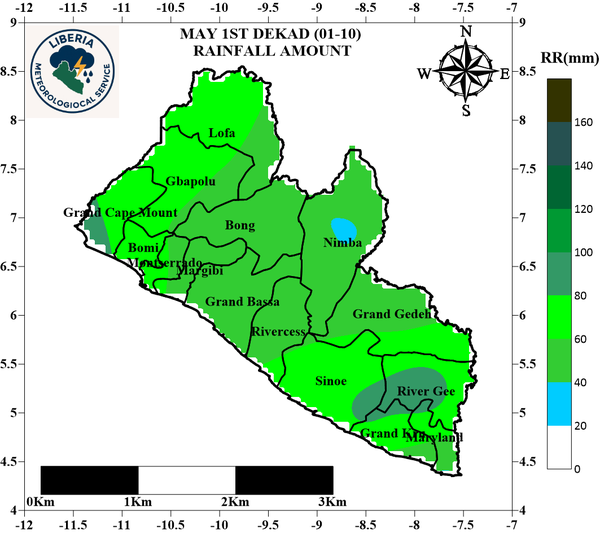
The first Dekad of May 2026 was characterized by an increase in rainfall amounts across the country. Nationwide, rainfall totals ranged from 38.0mm to 91.5mm, with the south-central part of River Gee, eastern Sinoe, and southwestern Grand Cape Mount County experiencing the highest rainfall amounts during this period. The southern, central, and northern parts of the country experienced moderate rainfall, while the western region and parts of the south recorded the lowest rainfall amounts during the period.

Summary:
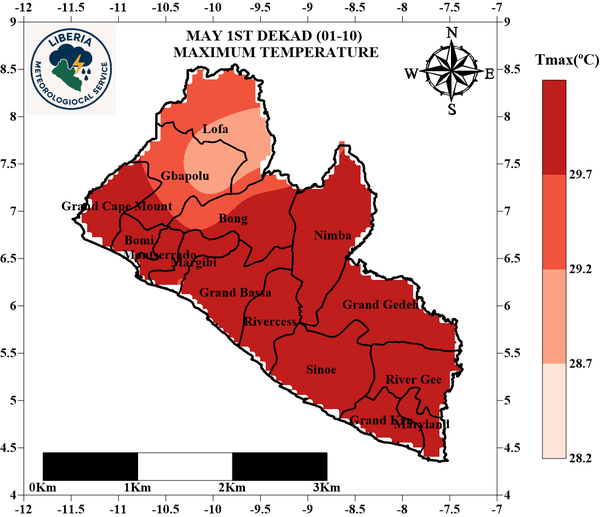
The first dekad of May 2026 was marked by an increase in maximum temperature across the country. The northwestern region experienced relatively low maximum temperature. However, parts of Lofa and Gbapolu recorded the lowest maximum temperature. During this period, maximum temperature ranged between 28.8°C and 31.2°C.

Summary:
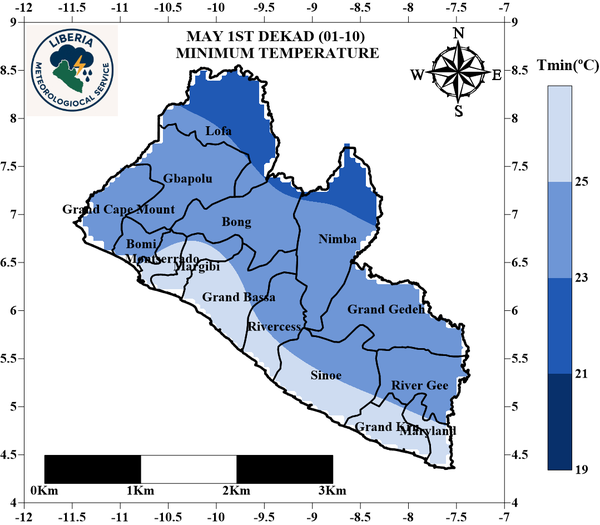
The first Dekad of May 2026 was marked by variation in minimum temperature. Some parts of the coastal counties experienced high minimum temperature, while the north of Lofa, Nimba and extreme north of Bong county experienced the lowest. Minimum temperature during this period ranged from 22.7°C to 27.2°C.
Summary:
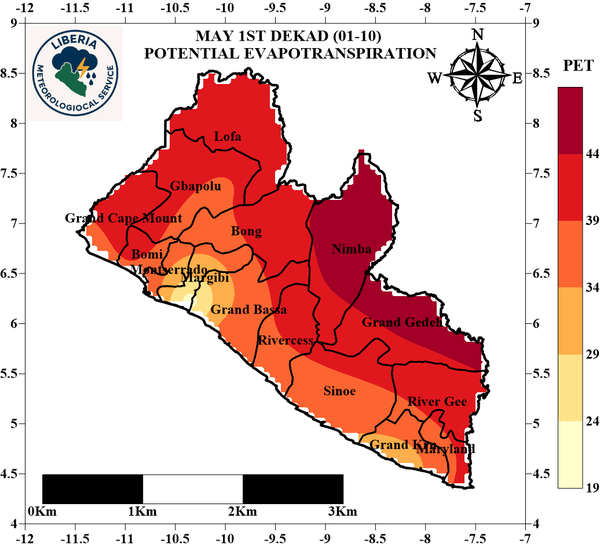
During the first Dekad of May 2026, most parts of the Country experienced intense sunshine with high evapotranspiration rates. However, west of Montserrado, south of Margibi and Grand Kru, west of Grand Bassa county experienced lowest evapotranspiration rate while counties in the north and western regions experienced high evapotranspiration rate.

Summary:
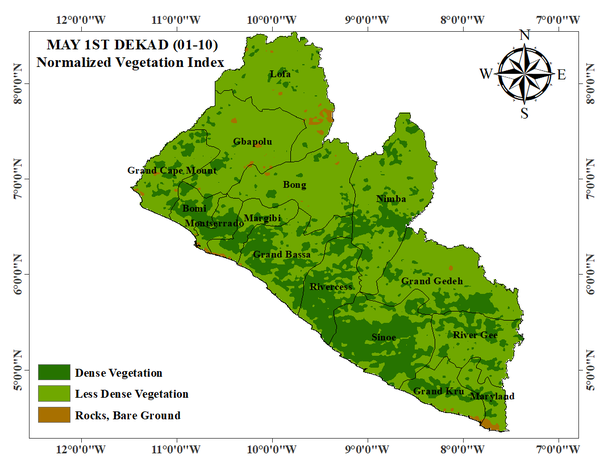
During the first Dekad of May, vegetation is gradually becoming dense. The coastal region experienced moderate increase in vegetation while the northern region experienced less dense vegetation during this period.

Highlight of the Agrometeorological Dekadal Bulletin for the first DEKAD of May 2026
Rainfall: The first Dekad of May 2026 was characterized by an increase in rainfall amounts across the country. Nationwide, rainfall totals ranged from 38.0mm to 91.5mm, with the south-central part of River Gee, eastern Sinoe, and southwestern Grand Cape Mount County experiencing the highest rainfall amounts during this period. The southern, central, and northern parts of the country experienced moderate rainfall, while the western region and parts of the south recorded the lowest rainfall amounts during the period.
Maximum Temperature: The first dekad of May 2026 was marked by an increase in maximum temperature across the country. The northwestern region experienced relatively low maximum temperature. However, parts of Lofa and Gbapolu recorded the lowest maximum temperature. During this period, maximum temperature ranged between 28.8°C and 31.2°C.
Minimum Temperature: The first Dekad of May 2026 was marked by variation in minimum temperature. Some parts of the coastal counties experienced high minimum temperature, while the north of Lofa, Nimba and extreme north of Bong County experienced the lowest. Minimum temperature during this period ranged from 22.7°C to 27.2°C.
PET: During the first Dekad of May 2026, most parts of the Country experienced intense sunshine with high evapotranspiration rates. However, west of Montserrado, south of Margibi and Grand Kru, west of Grand Bassa county experienced lowest evapotranspiration rate while counties in the north and western regions experienced high evapotranspiration rate.
NDVI: During the first Dekad of May, vegetation is gradually becoming dense. The coastal region experienced moderate increase in vegetation while the northern region experienced less dense vegetation during this period.
Weather outlook for May
RAINFALL: In May 2026, the forecasted cumulative rainfall amount across all counties is anticipated to be between 181.9mm and 388.7mm. The coastal region is anticipated to record the highest rainfall amount. The central region is anticipated to record rainfall amount between 220-270mm during the period under review. Nevertheless, the north of the country is predicted to experience low rainfall between 170-220.0mm during the period under review
Relative Humidity (RH): During the month of May high relative humidity is predicted in the southeast region affecting Rivergee, Grand Gedeh, Sinoe, Maryland and Grand Kru counties. The western region is expected to receive low relative humidity. However, the central region is predicted to experience moderate relative during this period. Average relative humidity within the month of May 2026 is predicted to range from 79.9% to 86.5%.
Maximum Temperature: The maximum temperature in May 2026 is anticipated to range between 28.8°C to 31.7°C across the Country. High temperature is expected in G. Cape Mount, Bomi, Montrerrado, parts of Gbapolu, Bong and Nimba counties. Other parts of the Country is anticipated to receive moderate temperature
Minimum Temperature: Minimum temperature across the country in May 2026 is anticipated to range between 21.6°C and 26.7°C. The highest minimum temperature is anticipated to occur along the coastal region which includes: Maryland, Grand Kru, Sinoe, Rivercess, Grand Bassa, Margibi and Montserrado while the lowest minimum temperature is expected in Lofa and parts of Nimba, Bong, Gbapolu and Grand Gedeh counties.
Farmers Advisories
As rainfall has gradually commenced, vegetation is becoming denser, and rainfall is predicted to moderately increase in the coming dekads of May. Additionally, soil moisture is gradually improving. Farmers are therefore strongly encouraged to take the following precautions in their agricultural practices:
· Field Preparation:
Move to upland areas for their vegetable and rice production; this will help reduce the risk of damage and maximize yields for farmers across the country.
Create drainage channels in low land where possible to prevent waterlogging in case of heavy rainfall.
Farmers are advised to properly lay out their fields for rice production during the coming season.
Farmers are also advised to begin preparing upland areas for rice and other crops ahead of the upcoming cropping season.
· Crop Management:
Plant drought- or water-tolerant crop varieties to reduce the risk of losses.
Monitor crops regularly for signs of disease or stress caused by high evapotranspiration.
Irrigate when high evaporation and evapotranspiration are observed.
· Livestock Management:
Move animals to upland areas to avoid being affected by heavy rainfall.
Ensure animals are properly housed and maintain good hygiene to prevent disease outbreaks.
Provide clean drinking water regularly to prevent dehydration and heat stress.
Check livestock frequently for symptoms of illness and provide timely treatment when needed.
· General Precautions:
Stay informed about weather updates through the Liberia Meteorological Service website (https://meteoliberia.com).
Work closely with local agricultural extension officers for region-specific advice on crop and livestock management.