Summary:
AGROMETEOROLOGICAL DEKADAL BULLETIN-2ND DEKAD OF JANUARY 2026
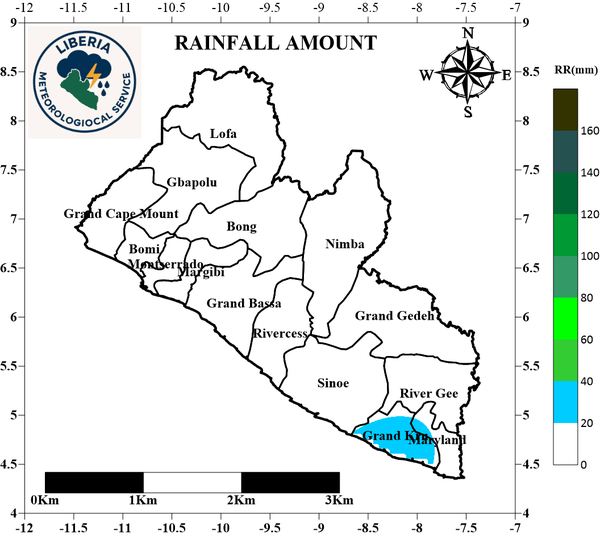
Rainfall during the second Dakad of January 2026: The second DEKAD of January 2026 were characterized by low rainfall across most parts of the country. However, Grand Kru received the highest rainfall amount during this period with rainfall at 24.0mm. Nationwide, rainfall amounts ranged from 0.00mm to 24.0mm.
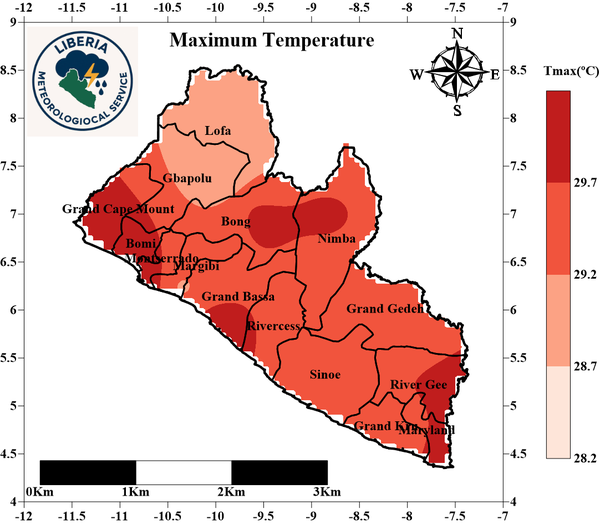
Maximum Temperature: The second DEKAD of January 2026 was marked by an increase in maximum temperatures in Grand Cape Mount, Bomi and parts of Montserrado, Bong, Nimba, River Gee and Maryland while Lofa and part of Gbapolu recorded the lowest. During this period maximum temperature ranged between 28.8°C and 30.2°C.
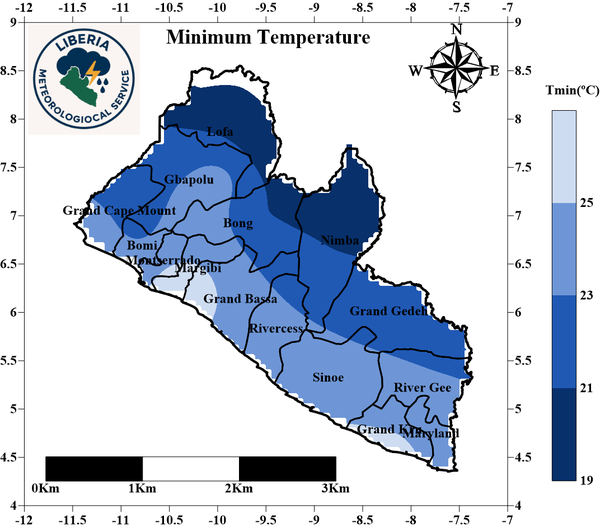
Minimum Temperature: The second DEKAD of January 2026 were marked by variation in minimum temperature. The southern (costal) region experienced highest value, while the northern and northwestern region experienced the lowest. Minimum temperature during this period ranged from 18.9°C to 26.8°C.
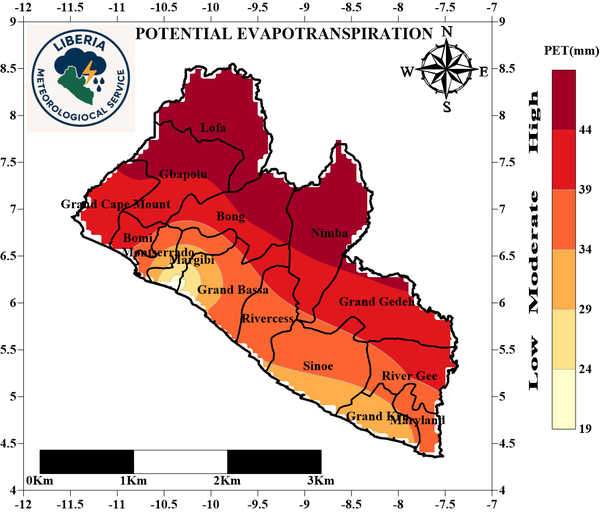
Potential Evapotranspiration: During the second DEKAD of January 2026, the north and northwest, parts of the central region experienced instanced sunshine with high evapotranspiration rates. The southern region experienced low evapotranspiration rate with Montserrado and Grand Bassa experiencing the lowest.
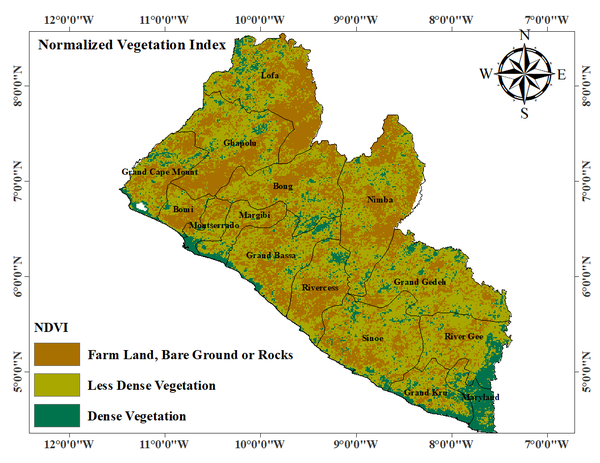
Normalized difference Vegetation Index (NDVI): During the second DEKAD of January 2026 majority part of the Country experienced decrease in vegetation. However, Maryland and the southern part Montserrado experienced dense vegetation.
Forecast for the month of January 2026
Rainfall: In January 2026, the forecasted cumulative rainfall amount across the counties is anticipated to be between 20.9 mm and 58.0 mm. The southeast coastal counties are expected to record rainfall amounts between 48.9mm and 58.0mm. Rainfall amounts below 20.0mm are predicted in upper Lofa and Nimba counties.
Relative Humidity: Relative humidity across Liberia for January 2026 is predicted to range from 62.4% to 81.8%, as shown in Figure 12. The highest range of values (79.5–81.8%) is expected in the southern counties. The extreme north is expected to record the lowest relative humidity, 62.4% while the rest of the country is expected to record a range of 62.7% to 77.1%.
Maximum Temperature: The maximum temperature in January 2026 is anticipated to be 28.9°C to 32.1°C across the counties. The lowest and highest maximum daytime temperatures of 28.9°C and 29.4°C are predicted over Maryland, GrandCess and Sinoe counties.
Minimum Temperature: Nighttime temperatures across the country in January 2026 are anticipated to range between 17.4°C and 25.9°C. The lowest nighttime temperature range of 16.9°C to 19.1°C is anticipated in parts of Lofa, Gbapolu, Bong and Nimba counties, while the highest nighttime temperature of 25.9°C is expected in the southern parts of Margibi County.
Farmers Advisories
As rainfall is expected to decrease in the last dekad of January 2026, and soil moistures expected to decrease, farmers are strongly encouraged to take the following precautions in their agricultural practices:
Field Preparation:
Move to low lying areas for vegetable production, this will reduce the risk of wilting and maximize yield of vegetables.
Create drainage channels where possible to prevent water logging in case of heavy rainfall.
Crop Management:
Plant drought tolerant crop variety to reduce the risk of losses.
Monitor crops regularly for sign of disease or stress caused by lost to high evapotranspiration.
Irrigate when you observe high evaporation and evapotranspiration.
Livestock Management:
Move animals to low-lying areas to avoid heat stress.
Ensure animals are properly housed and maintain good hygiene to prevent disease outbreaks.
Provide clean drinking water regularly to prevent dehydration and heat stress.
Check livestock frequently for symptoms of illness and provide timely treatment when needed.
General Precautions:
Stay informed about weather updates through the Liberia Meteorological Service website (https://meteoliberia.com).
Work closely with local agricultural extension officers for region-specific advice on crop and livestock management.
By taking these proactive measures, farmers can protect their crops and livestock, reduce losses, and maintain productive agricultural practices during periods of increased rainfall.